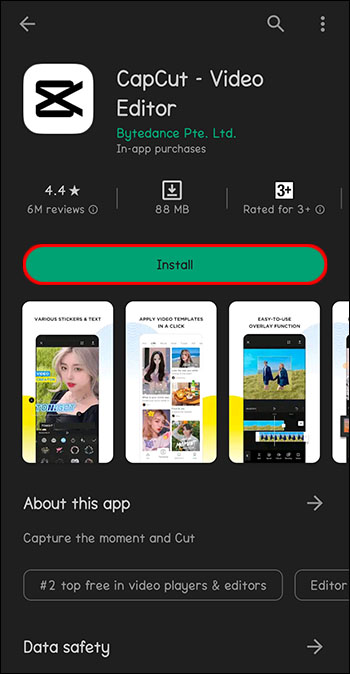
Why CapCut Templates Are Dominating Instagram Reels
If your Instagram Explore page looks anything like mine, you've noticed something: half the Reels that stop your scroll share that same polished, perfectly-timed aesthetic. The transitions hit the beat. The text reveals feel cinematic. The photo slideshows have that magazine-quality flow. And the secret behind most of them? CapCut templates.
I started using CapCut templates for Reels about two years ago, and honestly, it changed my entire content workflow. Before templates, I'd spend 45 minutes to an hour editing a single 15-second Reel — matching audio beats, timing transitions, getting the text placement right. Now? I can produce a better-looking Reel in under five minutes. That's not an exaggeration.
Here's why CapCut templates have become the go-to for Reels creators across every niche — from fashion and food to fitness and finance:
Speed without sacrifice — Templates handle the hard parts (timing, transitions, music sync) so you focus on your content, not your editing skills
Trend-native design — CapCut's template library updates constantly to reflect what's trending on Instagram right now, not last month
Zero learning curve — You don't need to know anything about video editing. Seriously. If you can select photos from your camera roll, you can use a template
Free and watermark-free — Unlike most "free" editing tools, CapCut doesn't slap a logo on your exports. Your Reel looks 100% yours
Full customization — Templates are starting points, not cages. Every element is editable — swap clips, change fonts, adjust colors, replace music
The numbers back this up. CapCut has been the most downloaded video editing app worldwide for three years running, and Instagram Reels is the #1 use case. Creators who use templates consistently report 2–3x faster production and, surprisingly to many, higher engagement rates — because templates are designed around the patterns that keep people watching.
💡
Real talk: I was skeptical about templates at first. "Wouldn't everyone's content look the same?" In practice, no. The clips you use, the text you add, your niche, your personal style — all of that makes each template feel unique. Two creators using the same template will produce completely different Reels.
CapCut's template library makes creating polished Instagram Reels as simple as choosing clips and tapping export
The Best CapCut Template Categories for Reels (2025)
Not all templates are created equal — and knowing which categories work best for Reels will save you a lot of scrolling. After testing hundreds of templates over the past year, these are the categories that consistently produce the highest-performing Reels.
✨
Transition Templates
Smooth zoom-ins, 3D flips, glitch cuts, and whip pans timed to music beats. The backbone of viral Reels — these templates make amateur footage look cinematic.
✍️
Text Reveal Templates
Kinetic typography, typewriter effects, and animated text that builds suspense. Perfect for storytelling Reels, tips lists, and "things I wish I knew" content.
📷
Photo Slideshow Templates
Turn static photos into dynamic Reels with Ken Burns effects, parallax scrolling, and smooth pan-and-zoom. Ideal for travel, events, and portfolio showcases.
🎵
Music Sync Templates
Auto-beat-matching that syncs your cuts to the music drop. These templates analyze audio and place transitions exactly where they need to be. The result feels choreographed.
🌟
Aesthetic & Mood Templates
Vintage film grain, golden hour color grading, soft-focus dreamy looks. These templates add a vibe to your Reels that pure footage alone can't achieve.
🚀
Before/After & Reveal Templates
Split-screen comparisons, wipe reveals, and dramatic unveils. Perfect for fitness transformations, room makeovers, and product showcases that drive engagement.
Transition Templates: The Viral Backbone
Let's be honest — transitions are what separate a "meh" Reel from a "wait, how did they do that?" Reel. And transition templates are CapCut's biggest strength.
The most popular transition templates for Reels right now include 3D zoom transitions (where the camera appears to fly into the next scene), velocity edits (speed ramps that sync to music drops), and morph transitions (where one object seamlessly transforms into another). I've seen fitness creators use morph transitions to show workout transformations that rack up millions of views — the template handles the complex keyframing, and all they need to provide is the before and after clips.
The key to making transition templates work: match the energy of your clips to the template's pacing. A fast-paced transition template needs dynamic, movement-heavy clips. A slow cinematic template needs steady, well-composed shots. When the content matches the template's rhythm, the result feels intentional rather than templated.
Text Reveal Templates: Storytelling That Hooks
Text reveals have become one of Instagram's most engaging Reel formats. You know the style: a question appears on screen, each word builds suspense, and the answer reveals at just the right moment. CapCut's text reveal templates nail this format.
The templates I recommend most for text-based Reels are typewriter-style reveals (great for tips and list content), split-text animations (where text splits apart to reveal something behind it), and kinetic typography templates where the text itself becomes the visual. These work incredibly well for educational content, product reviews, and "hot take" Reels where the text IS the content.
One thing I've learned from experience: don't overload text templates with too many words. Instagram viewers scroll fast. If your text reveal takes more than 3 seconds to get to the point, you've already lost them. The best templates keep text punchy — 5 to 8 words per screen, max.
Don't have video footage? No problem. Photo slideshow templates are a game-changer for anyone who works primarily with still images — photographers, designers, real estate agents, food bloggers, travel creators.
What makes CapCut's photo slideshow templates special is the motion they add to static images. The Ken Burns effect (slow zoom and pan) is the foundation, but the best templates layer in parallax scrolling, 3D depth effects, and smooth cross-dissolves that make a series of photos feel like a cinematic experience. I've used these for travel Reels where I only had iPhone photos — and the comments always ask what camera I used. That's the power of a good template.
For photo slideshows, aim for 5–8 images per 15-second Reel or 10–15 images for a 30-second Reel. Too few and the pacing feels slow; too many and the viewer can't absorb what they're seeing.
Music Sync Templates: Beat-Perfect Editing Without the Work
Matching cuts to music beats is one of the most time-consuming parts of manual Reel editing. You have to listen to the audio, mark the beats, trim each clip to land on the exact frame, then check playback to see if it feels right. Rinse and repeat for every cut.
Music sync templates eliminate all of that. They come pre-timed to specific audio tracks — the transitions, cuts, zooms, and effects are already matched to the beat drops, buildups, and breaks in the music. You literally just drop in your clips, and the template handles the choreography.
The templates that perform best on Reels are synced to trending Instagram audio. When a song is blowing up on Reels, CapCut usually has matching templates within 48 hours. Using the right audio at the right time gives your Reel an algorithmic advantage — Instagram actively pushes Reels that use trending sounds.
🌟
Pro tip from my workflow: When I find a trending audio on Instagram, I immediately search for it in CapCut's template library. If there's a matching template, I'll batch-create 3–5 Reels using variations of that template with different clips. Post one per day. This strategy has consistently outperformed my manually edited content in reach and engagement.
Ready to Try These Templates?
Browse thousands of free, trending Reels templates in CapCut's library — no watermarks, no subscriptions required.
How to Use CapCut Templates for Instagram Reels (Step-by-Step)
If you've never used a CapCut template before, this walkthrough will have you publishing your first template-based Reel in under 10 minutes. I'm going to be specific here — not vague "just click around" instructions, but exact steps with the tips I wish someone had told me.
1
Open Templates Tab
Launch CapCut and tap Plantillas at the bottom (mobile) or sidebar (desktop). Search "Reels," "Instagram," or a specific style like "transition" or "slideshow."
2
Preview & Select
Tap any template to preview. Check the clip count, duration, and style. Hit "Use template" when you find one that fits your content.
3
Add Your Media
Select photos or video clips from your gallery. CapCut shows exactly how many are needed. Pick your strongest, highest-quality media first.
4
Customize Everything
Tap any element to edit: change text, swap fonts, adjust colors, replace music, tweak transition timing. Make it yours.
5
Check Reel Settings
Verify: 9:16 aspect ratio, 1080x1920 resolution, 30fps. Keep your Reel between 15–60 seconds for the best reach.
6
Export & Post
Export at 1080p, high quality. Share directly to Instagram Reels or save and upload manually for better caption control.
Detailed Walkthrough: From Template to Published Reel
Let me walk you through the full process with the context that actually matters — the stuff that step-by-step lists usually skip.
Step 1: Finding the right template. Don't just grab the first template you see. Use CapCut's search filters strategically. Search by keywords like "Reels transition," "photo slideshow," or the specific trending audio you want to use. Sort by "Trending" to see what's currently performing well. I usually preview 5–10 templates before committing, because the preview video gives you a much better sense of pacing and style than the thumbnail alone.
Step 2: Selecting your media wisely. This is where most people go wrong. They pick random clips from their gallery. Instead, plan your clips to match the template's energy. If the template has fast transitions, choose dynamic clips with movement. If it's a slow aesthetic template, use steady, well-lit shots. The quality of your input directly determines the quality of the output — a gorgeous template can't fix blurry, poorly-lit footage.
Step 3: Customization that matters. Once the template loads with your clips, resist the urge to immediately export. Take two minutes to customize. Change the default text to something specific to YOUR content. Swap the font if the default doesn't match your brand. Adjust the music volume — most templates set music louder than it needs to be for Reels, where people often watch with captions. If you're adding voiceover, bring the template music down to about 20% volume.
Step 4: The export settings that most people get wrong. This is crucial. Export at 1080p resolution, not 4K. Instagram compresses 4K down to 1080p anyway, and the extra file size can actually cause more compression artifacts. Set framerate to 30fps (not 60fps — Instagram re-encodes 60fps content more aggressively). And turn off Smart HDR for the Instagram export — HDR content gets aggressively compressed on Instagram and can look washed out.
CapCut's template library is organized by trending categories, making it easy to find the perfect starting point for your Reel
Customization Tips: Make Templates Look Original
Using a template doesn't mean your Reel has to look generic. The best creators use templates as a foundation and then layer in their own touch. Here are the customization strategies I use on every template-based Reel.
Text and Font Customization
The default text in templates is placeholder content — it's designed to show you what's possible, not to be published as-is. Always replace it with your own copy. Beyond just changing the words, consider swapping the font to match your brand. CapCut offers hundreds of fonts, but for Reels, I stick to bold, sans-serif fonts that are readable on small screens. Montserrat, Bebas Neue, and the built-in "Bold Title" style consistently perform well.
Font color matters more than you think. White text with a subtle shadow or dark outline is readable on any background. Avoid light fonts on light backgrounds — it's the #1 readability mistake I see in Reels. CapCut lets you add text stroke (outline) directly in the text editor, and a 2px black stroke on white text makes it pop on any clip.
Color Grading and Filters
Templates often come with a color grade applied, but you can change it to match your aesthetic. The color grading tools in CapCut are surprisingly powerful for a free app. My go-to adjustments for Reels:
Increase contrast slightly (+10 to +15) — Instagram compression reduces contrast, so starting a bit higher compensates for that
Boost saturation mildly (+5 to +10) — Makes colors pop on phone screens without looking unnatural
Add a tiny bit of warmth — Warm-toned Reels consistently outperform cool-toned ones in engagement. Move the temperature slider just 2–3 points warmer
Reduce highlights, increase shadows — This creates that "cinematic" dynamic range that looks professional on phone screens
Save your color adjustments as a custom preset in CapCut. This way, every Reel you create has a consistent look — which builds brand recognition. Viewers start associating that color style with your content, even subconsciously.
Music and Audio Adjustments
The template's default audio is a good starting point, but for Instagram Reels specifically, you often want to swap the audio for a currently trending sound. Instagram's algorithm gives preferential treatment to Reels using trending audio. To find trending audio, browse the Reels tab and watch for the arrow icon next to audio names — that indicates a trending track.
Once you identify a trending audio, search for it in CapCut's music library. If it's there, swap it in and re-align your clip transitions to the new beat. If the trending audio isn't in CapCut's library, you can import it or use Instagram's built-in audio selection after uploading.
For Reels with voiceover, the audio layering order should be: voiceover at 100%, template music at 15–25%, sound effects at 40–60%. This hierarchy ensures your message comes through clearly while maintaining the template's energy.
⚠️
Copyright warning: CapCut's built-in music library is commercial-use safe, but if you import external audio, make sure it's royalty-free or a trending Instagram audio that's available for use. Using copyrighted music in Reels can result in your audio being muted or your Reel being taken down.
Optimal Settings for Instagram Reels in CapCut
Getting your technical settings right is the difference between a Reel that looks crisp and professional and one that looks blurry after Instagram's compression. These are the exact settings I use for every Reel export.
Setting
Recommended Value
Why It Matters
Aspect Ratio
9:16 (Vertical)
Full-screen vertical display on mobile; required for Reels feed
Resolution
1080 x 1920
Max resolution Instagram supports for Reels; higher gets downscaled
Frame Rate
30fps
Instagram re-encodes 60fps more aggressively; 30fps preserves quality
Duration
15–30 seconds
Highest engagement window; algorithm favors full watch-throughs
Export Quality
High (1080p)
Best quality-to-file-size ratio; 4K gets compressed down anyway
Smart HDR
Off
Instagram compresses HDR heavily; SDR looks better after upload
Codec
H.264
Maximum compatibility; fewer re-encoding artifacts on upload
One setting that most guides don't mention: Safe zones. Instagram overlays your username, caption, and interaction buttons on the bottom 15–20% of a Reel. Any text or important visual elements in that zone will be obscured. CapCut doesn't have a built-in Reels safe zone guide, so I keep critical content in the middle 60% of the frame vertically. The top and bottom are for background footage only.
🚀
Export trick I swear by: After exporting from CapCut, upload to Instagram via the mobile app, not the desktop browser. Instagram's mobile upload pipeline has better compression algorithms and produces noticeably sharper results. If you export on desktop, AirDrop or transfer the file to your phone first.
How to Find Trending CapCut Templates for Reels
Knowing where and how to discover templates that are currently gaining traction is half the battle. The template library has thousands of options — scrolling randomly is a waste of time. Here's my systematic approach.
In-App Discovery
CapCut's Templates tab is the first place to look. The "Trending" and "Hot" sections are curated algorithmically — they reflect what creators worldwide are actively using. Pay attention to the usage count displayed on each template. A template with 500K+ uses is proven to work. But also check the "New" section for recently uploaded templates that haven't gone viral yet — using these early can give your Reel a novelty advantage.
Use the search bar strategically. Don't just search "Reels." Try specific queries: "beat drop transition," "recipe slideshow," "GRWM template," "product showcase," "travel montage." The more specific your search, the more relevant the results.
Social Media Scouting
When you see a Reel on Instagram that uses a CapCut template, many creators add a "CapCut" or template name link in their caption or bio. Tap through to discover the exact template they used. On TikTok, this is even more common — creators frequently share template links in video descriptions.
Follow hashtags like #CapCutTemplate, #ReelsTemplate, and #CapCutEdit on Instagram and TikTok. These hashtags surface new template trends before they hit CapCut's featured sections. I check these hashtags once a week and bookmark templates that match my content style.
Timing and Seasonal Templates
CapCut releases seasonal and event-specific templates regularly. Before major events (holidays, back-to-school, fashion weeks, cultural moments), new themed templates flood the library. Plan ahead. Check for holiday templates 2–3 weeks before the event. Creating seasonal content early means your Reel hits feeds while the trend is building, not after it's peaked.
Start Creating Reels That Get Noticed
Join millions of creators using CapCut templates to produce professional Reels in minutes, not hours.
Creating Your Own Reels-Optimized Content in CapCut
Templates are incredible for speed, but there comes a point where you want to create something truly original. The good news: everything you learn from using templates — pacing, transitions, music sync, text placement — translates directly to building Reels from scratch in CapCut.
Building a Reel from Scratch
Start with a new 9:16 project. Import your clips and arrange them on the timeline. Here's the workflow I've refined over hundreds of Reels:
Lay down the audio first. Choose your music track or voiceover and place it on the timeline before adding any clips. Edit to the audio, not the other way around. This ensures your cuts naturally fall on beats.
Mark the beats. CapCut has an auto-beat detection feature. Enable it — it places markers on the audio's key beats. Use these markers as cut points for your clips.
Add your clips between beat markers. Trim each clip to start and end on a beat. This creates that rhythmic, professional feel that keeps viewers watching.
Add transitions between clips. Keep it simple — one or two transition types max per Reel. Consistency looks intentional; variety looks chaotic.
Layer text last. Text should complement the visuals, not compete with them. Add text after your visual edit is finalized.
Apply color grading as an adjustment layer. One color grade across all clips creates visual cohesion. Use an adjustment layer so you can tweak it once and affect everything.
Saving Your Edit as a Personal Template
Once you create a Reel you're proud of, save the project structure as your own template. CapCut lets you duplicate projects — keep the timeline structure, transitions, and text placements, but swap out the clips next time. This is how professional content creators maintain a consistent style without re-doing the editing work from scratch every time.
I have about 8 "personal templates" saved — each one is a different Reel format I commonly use (product review, before/after, day-in-my-life, tips list, etc.). When I need a new Reel, I pick the matching format, swap in fresh clips, and I'm done in minutes. It's the best of both worlds: original content with template-level speed.
Advanced Tricks for CapCut Reels That Stand Out
If you've mastered the basics and want to push your Reels to the next level, these are the techniques that separate good Reels from viral ones.
Speed ramping for dramatic effect — Use CapCut's bezier speed curve (not just basic slow-mo) to create cinematic speed transitions. Slow to fast on a music drop feels incredible
Mask transitions — Use CapCut's masking tool to create transitions where one object "reveals" the next scene. It looks like a $500 After Effects trick but takes 2 minutes in CapCut
Overlay blending modes — Add a second video layer on top of your main clip and experiment with blending modes (screen, multiply, overlay). This creates unique visual effects that no template can replicate
Sound effect layering — Add subtle "whoosh" sounds on transitions and "pop" sounds on text reveals. These micro-details are subconsciously satisfying and increase watch-through rates
Auto-captions as a design element — Instead of plain subtitles, style your auto-captions with bold fonts, color highlights on key words, and animated entrances. CapCut's caption editor lets you do all of this
The 1-second hook — Add a text overlay or visual punch in the very first second of your Reel. Something that creates curiosity or promises value. Instagram's algorithm weighs the first second heavily in deciding whether to distribute your Reel
❗
Don't forget the CapCut outro clip. Many templates add a short CapCut branding clip at the end of your timeline. Always check the last 1–2 seconds of your timeline and delete this clip before exporting. It's not a watermark on your video — it's a separate clip element that's easy to remove.
Maximizing Reel Engagement with the Right Template Strategy
The template you choose sets the stage, but how you deploy it determines whether your Reel actually reaches people. Here's what I've learned about the relationship between templates and the Instagram algorithm.
Watch time is everything. Instagram's algorithm prioritizes Reels with high watch-through rates. Templates help here because they're designed to maintain pacing that keeps viewers engaged. But you need to do your part: front-load the most interesting content. Your first clip should be the most compelling — don't save the best for last, because most viewers don't make it that far.
Loop-ability is underrated. The best-performing Reels are ones that seamlessly loop — the ending flows back into the beginning, encouraging rewatches. Some CapCut templates are designed to loop naturally. When you find one, use it. A Reel that gets watched 3 times counts as 3 views, and the algorithm reads that as high engagement.
Post when your audience is active. Even the most beautiful template-based Reel will underperform if you post it at 3 AM when your followers are sleeping. Check your Instagram Insights for peak activity times and schedule accordingly.
Use the first comment strategically. Immediately after posting your Reel, drop a comment that encourages engagement: a question, a call-to-action, or additional context. The first comment gets the engagement flywheel spinning, and the algorithm takes notice.
Common Mistakes When Using CapCut Templates for Reels
After helping dozens of friends and colleagues get started with template-based Reels, I see the same mistakes repeatedly. Avoid these and you're already ahead of 80% of creators.
Using the template's default text. This sounds obvious, but I see it constantly. "Your Text Here" or "Add Title" sitting right there in published Reels. Always customize every text element.
Ignoring aspect ratio. Some templates default to 16:9. If you're making a Reel, switch to 9:16 BEFORE adding clips. Changing aspect ratio mid-edit ruins your composition.
Over-filtering. Templates often include a color filter. Adding more filters on top creates an oversaturated, unnatural look. If you want to change the vibe, replace the template's filter rather than stacking another one.
Using low-resolution media. A template can't fix 480p footage or tiny screenshots. Use the highest quality source material you have. For photos, anything above 1080px wide will look sharp.
Forgetting the safe zones. Text or important visuals in the bottom 20% of the frame will be hidden behind Instagram's UI elements. Keep critical content centered.
Not deleting the CapCut outro. Check your timeline for the CapCut branding clip at the end. Delete it before export. It's not a watermark — it's a removable clip.
Exporting at 4K for Instagram. More resolution is not always better. 1080p exports look better on Instagram because they undergo less aggressive compression.
Ready to Create Scroll-Stopping Reels?
Thousands of free templates, zero watermarks, and the fastest workflow in the game. Your next viral Reel starts here.
Everything you need to know about using CapCut templates for Instagram Reels.
Yes, the vast majority of CapCut templates are completely free, including many that are specifically optimized for Instagram Reels. The free template library includes transition effects, text reveals, photo slideshows, and music-synced templates. CapCut Pro adds premium templates with more advanced effects, but the free collection is extensive and updated weekly with trending styles.
The ideal aspect ratio for Instagram Reels is 9:16 (vertical), with a resolution of 1080x1920 pixels. When you select a Reels-specific template in CapCut, this aspect ratio is set automatically. For export, use 1080p resolution at 30fps. Avoid exporting at 4K — Instagram compresses it down to 1080p anyway, and the extra compression can introduce artifacts.
CapCut templates are fully customizable. After applying a template, you can edit every single element: swap out video clips and photos, change text content and fonts, adjust color grading, modify transition timing and styles, replace background music, add sound effects, and even restructure the timeline. Think of templates as professional starting points, not locked-in designs.
Several strategies work well. First, browse the Templates tab in CapCut and check the "Trending" and "Hot" sections. Second, search specific keywords like "Reels transition" or "beat drop." Third, monitor Instagram and TikTok hashtags like #CapCutTemplate for creator recommendations. Fourth, check CapCut's Discover section which curates trending templates weekly. Fifth, when you see a Reel you like, look for template links in the creator's caption or bio.
No. CapCut does not add a watermark to your exported videos, regardless of whether you use a template or the free plan. However, some templates include a CapCut branding clip at the end of the timeline — this is a separate clip element, not a watermark. Simply select it in the timeline and delete it before exporting.
Instagram Reels can be up to 90 seconds, but data consistently shows that 15–30 second Reels get the highest engagement rates and most algorithm push. The sweet spot depends on your content type: quick showcases and transitions work best at 15 seconds, tutorials and tips at 30–45 seconds, and storytelling content at 45–60 seconds. CapCut templates are typically pre-timed to these optimal lengths.
Yes, though the template library is most extensive on the mobile app. The CapCut desktop app and web editor also offer templates, with the collection growing steadily. Projects created with templates on mobile sync to desktop through your CapCut account, so you can apply a template on your phone and then do detailed customization on your computer with a larger screen and more precise controls.